
Port of Miami Presents:
Cruise Smart Miami
Introduction: Welcome to the Cruise Capital of the World
Introduction: Welcome to the Cruise Capital of the World
Transcript
Welcome to Cruise Smart Miami, presented by The Port of Miami and Visit Florida Guide, where we Connect Destinations with Visitors. This series is here to help you feel confident, informed, and fully prepared for your cruise experience from the Port of Miami. Whether this is your first sailing or you’re returning to one of the world’s most iconic cruise ports, we’re going to walk you through everything you need to know before and after your trip.
Today, we’re starting with the essentials—where the Port of Miami is located, why it’s known as the Cruise Capital of the World, what you can expect when you arrive, and how this series will guide you through your entire cruise journey.
Before we dive in, here are today’s key focus points:
- The Port of Miami sits just east of downtown Miami on Dodge Island, connected by the PortMiami Tunnel and the MacArthur Causeway.
- It’s recognized as the busiest cruise port in the world, serving millions of passengers every year.
- Travelers arriving at the port can expect a clear, organized flow with modern terminals and helpful signage.
- And throughout this series, we’ll walk you through every step of the cruise experience—from arrival, to boarding, to exploring Miami before and after your sailing.
Let’s take a closer look at each of these.
Let’s start with the Port of Miami’s location and layout.
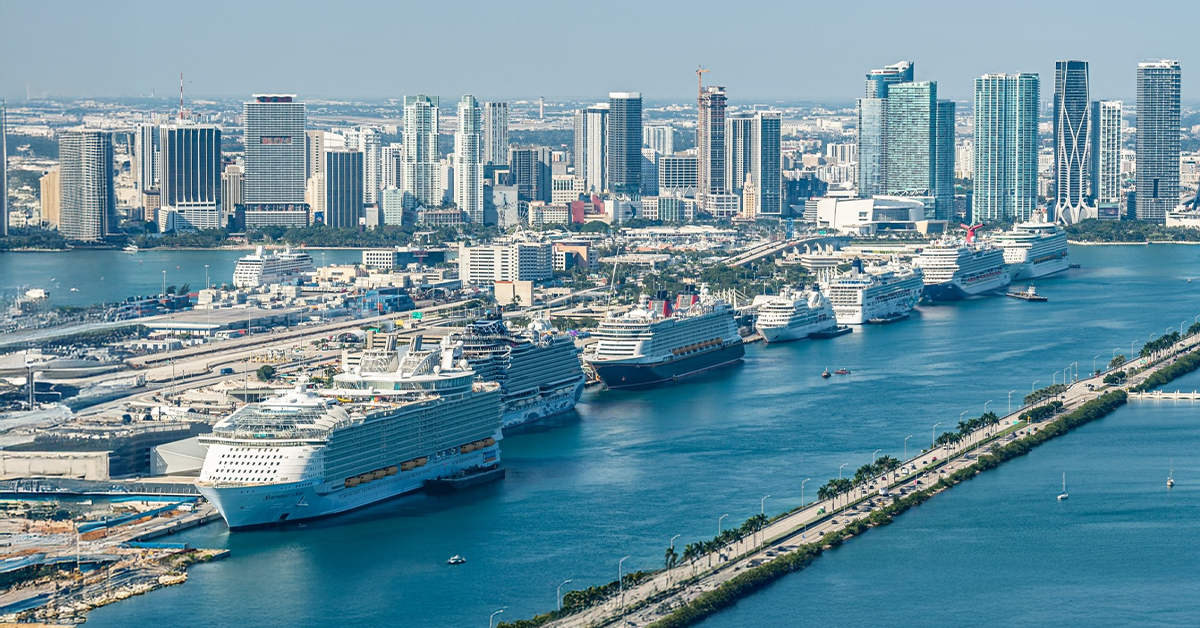
The Port of Miami sits on Dodge Island, a man‑made island positioned just east of downtown. If you’ve ever driven along the MacArthur Causeway and seen cruise ships rising above the skyline like floating skyscrapers, you’ve already had a glimpse of this incredible port.
Its location is one of its biggest advantages. You’re close to Miami International Airport, minutes from downtown hotels, and just a short ride from neighborhoods like Brickell, Wynwood, Midtown, and Miami Beach.
There are two main ways to access the port. The first is the MacArthur Causeway—a scenic drive over Biscayne Bay. The second is the PortMiami Tunnel, a direct underground route that helps reduce traffic and provides a smooth, efficient entry into the port. Whether you’re arriving by car, shuttle, taxi, or rideshare, getting to the port is straightforward.
Once inside, you’ll find a collection of modern cruise terminals, each designed to serve specific cruise lines and ships. These terminals are bright, spacious, and built to handle large numbers of passengers with ease. Wide walkways, clear signage, and designated lanes for drop‑off and pick‑up help keep everything moving. And throughout this series, we’ll help you understand how to identify your terminal, where to go, and what to expect once you arrive.
Now, let’s talk about why the Port of Miami is known as the Cruise Capital of the World.
The Port of Miami holds the title of the busiest cruise port in the world—and that’s not just a slogan. It’s a reflection of scale, innovation, and global reach.
Every year, millions of passengers pass through its terminals, boarding some of the largest and most advanced cruise ships ever built. From mega‑ships carrying thousands of guests to luxury vessels offering boutique experiences, the port serves an extraordinary range of cruise lines and itineraries.
Miami’s location plays a major role in its success. Positioned at the gateway to the Caribbean, the Bahamas, and Central America, the port offers direct access to some of the most popular cruise destinations in the world. Cruise lines choose Miami because of its deep‑water channels, modern infrastructure, and the city’s reputation as a vibrant tourism hub.
But it’s not just geography. The Port of Miami has invested heavily in state‑of‑the‑art terminals, advanced security systems, and efficient passenger processing. These investments allow the port to handle high volumes of travelers while still delivering a smooth, enjoyable experience. The result is a port that feels both grand in scale and surprisingly easy to navigate.
Next, let’s look at what travelers can expect when they arrive.
Arriving at the Port of Miami is an experience all its own. The first thing you’ll notice is the energy—thousands of travelers, luggage rolling, families gathering, and ships towering overhead. But despite the size and activity, the port is designed for clarity and flow.
As you approach your terminal, you’ll see clear signage directing you to the correct drop‑off lane or parking area. Port staff are stationed throughout the area to help guide passengers and answer questions. If you’re arriving by rideshare or taxi, designated zones make it easy to unload your luggage and head straight into the terminal.
Inside, you’ll find a streamlined check‑in process. Cruise lines typically recommend arriving at least two hours before your scheduled boarding time, and that’s a guideline worth following. Arriving early gives you plenty of time to check in, pass through security, and settle into the boarding process without feeling rushed.
Security screening at the Port of Miami is similar to airport security, but it generally moves faster. You’ll present your travel documents, pass through metal detectors, and have your luggage scanned. Once you’re through security, you’ll enter the boarding area, where cruise line staff will guide you onto the ship.
And in later episodes, we’ll break down everything from parking options to accessibility services, transportation from Miami International Airport, and insider do’s and don’ts to help you move through the port with confidence.
Finally, here’s what this series will help you prepare for.
This podcast series is designed to be your complete guide—from the moment you start planning your trip to the moment you step off the ship and explore Miami again.
Over the next several episodes, we’ll walk you through:
- How to navigate the port efficiently
- What transportation options work best for your schedule
- How to prepare for security and boarding
- What to expect from parking, drop‑off, and pick‑up
- How accessibility services work at the port
- What to do before and after your cruise
- And how to make the most of your time in Miami with curated recommendations from Visit Florida Guide
Think of this series as your personal cruise companion—clear, practical, and designed to help you enjoy every moment of your journey. Whether you’re traveling solo, with family, or as part of a group, our goal is to give you the knowledge and confidence to move through the Port of Miami with ease.
Thank you for joining us for the Introduction of Cruise Smart Miami. In our next episode, we’ll share the essential Do’s and Don’ts for a Smooth Port Experience, so you can start your cruise day with confidence.
To learn more about planning your Florida adventures, visit VisitFloridaGuide.com.
Cruise Smart Miami — A Closer Look at the Cruise Capital of the World
If you’ve been following the Cruise Smart Miami podcast series, you already know that each episode is designed to help travelers feel confident and prepared as they move through the Port of Miami. But Episode 8 takes a step back and looks at the bigger picture: what makes the Port of Miami such a powerhouse in the global cruise industry—and why it continues to earn its title as the Cruise Capital of the World.
This article expands on that episode, offering a deeper, more relaxed look at the port’s scale, impact, and future. Whether you’re a curious traveler, a cruise enthusiast, or someone who simply loves Miami, this overview gives you a richer understanding of the gateway that launches millions of vacations every year.
A Port Built for Every Kind of Cruiser
One of the most impressive things about the Port of Miami is the sheer variety of cruise lines that call it home. From the big names—Royal Caribbean, Carnival, Norwegian, MSC, Disney, Virgin Voyages—to luxury and boutique lines like Celebrity, Oceania, and Regent Seven Seas, the port supports an enormous range of travel styles.
This diversity means travelers can choose anything from:
- Mega‑ships with water parks, Broadway‑style theaters, and entire “neighborhoods” onboard
- Luxury vessels offering fine dining, personalized service, and intimate itineraries
- Specialty cruises focused on wellness, culture, food, or niche destinations
Miami isn’t just a starting point—it’s a launchpad for nearly every kind of cruise vacation imaginable.
A Global Leader in Passenger Volume
Every year, millions of passengers pass through the Port of Miami’s terminals. It consistently ranks as the busiest cruise port in the world, and that’s not by accident. Miami’s combination of location, infrastructure, and global connectivity makes it uniquely positioned to serve travelers from every corner of the world.
And with new terminals opening and more ships being added to the roster, the port’s capacity continues to grow.
Why Miami Remains the Top Port of Call
There are four major reasons Miami continues to dominate the cruise industry:
- A Strategic Location
Miami sits at the doorstep of the Caribbean, the Bahamas, Central America, and South America. That makes it ideal for both short weekend getaways and longer, more immersive voyages. - World‑Class Infrastructure
The port has invested heavily in modern terminals, streamlined traffic flow, and advanced security systems. These upgrades aren’t just for show—they make the traveler experience smoother and more predictable. - A City Worth Exploring
Miami itself is a destination. Beaches, nightlife, art districts, cultural neighborhoods, and world‑class dining make it a natural place to extend your vacation. - Global Connectivity
Miami International Airport is one of the busiest in the country, offering extensive domestic and international flight options. Getting to the port is easy, no matter where you’re coming from.
More Than Cruises: A Major Cargo Hub
While most travelers know the Port of Miami for its cruise operations, it’s also a significant cargo port. It handles millions of tons of goods every year—everything from electronics and apparel to food products and construction materials.
This cargo activity supports supply chains across the region and contributes billions of dollars to the local and state economy.
A Job Engine for South Florida
The port’s impact goes far beyond tourism. Tens of thousands of jobs are supported by port operations, including:
- Cruise line staff
- Longshore workers
- Transportation and logistics teams
- Hospitality and tourism employees
- Retail and service workers
These jobs help sustain Miami’s economy and support families throughout the region.
A Port That Never Stops Growing
To keep up with demand, the Port of Miami continues to invest in major capital improvement projects. These include:
- New state‑of‑the‑art cruise terminals
- Expanded roadways and improved traffic flow
- Upgraded cargo handling equipment
- Deepened and widened shipping channels
- Modernized security and screening systems
These upgrades ensure the port remains competitive and ready for the next generation of cruise and cargo vessels.
A Commitment to Sustainability
The Port of Miami is also looking ahead with a strong focus on environmental responsibility. Current initiatives include:
- Shore power so ships can plug in and reduce emissions
- Energy‑efficient terminal designs
- Water conservation and stormwater management systems
- Waste reduction and recycling programs
- Partnerships with cruise lines to support cleaner operations
These efforts reflect a long‑term vision: growth that doesn’t come at the expense of Miami’s natural environment.
The Bottom Line
The Port of Miami isn’t just a place where cruises begin—it’s a global gateway, an economic engine, and a symbol of Miami’s innovation and energy. Understanding the port’s scale and impact adds a new layer of appreciation to your travel experience.
Whether you’re stepping onto a mega‑ship for the first time or returning for your tenth voyage, you’re part of a story that stretches far beyond the shoreline.
MD Natural Care
Synerjis Adaptogen Pathway:

Travel Smart Supplements
Cruise Smart Miami Podcast series includes the following episodes:
- Introduction: Welcome to the Cruise Capital of the World
- Episode 1: Do’s and Don’ts for a Smooth Port Experience
- Episode 2: Transportation Options from Miami International Airport
- Episode 3: Parking, Drop‑Off, and Transportation Options
- Episode 4: Accessibility at the Port of Miami
- Episode 5: Safety, Security, and Boarding Procedures
- Episode 6: Disembarkation: What to Expect When Your Cruise Returns to Miami
- Episode 7: Pre‑ and Post‑Cruise Experiences in Miami
- Episode 8: About the Port of Miami