
Port of Miami Presents:
Cruise Smart Miami
Episode 5: Safety, Security, and Boarding Procedures
Episode 5: Safety, Security, and Boarding Procedures
Transcript
Welcome to Cruise Smart Miami, presented by The Port of Miami and Visit Florida Guide, where we Connect Destinations with Visitors. In today’s episode, we’re walking through safety, security, and boarding procedures so you know exactly what to expect before stepping onto your ship. This is one of the most important parts of your cruise day, and understanding the process can make your arrival smooth, predictable, and stress‑free.
Before we begin, here are today’s key focus points:
- The Port of Miami follows strict safety and security protocols designed to protect all passengers, crew, and vessels.
- Security screening is similar to airport procedures, including ID checks, luggage scanning, and metal detectors.
- Knowing what items are allowed and prohibited can speed up your boarding experience.
- Arriving at least two hours before your scheduled boarding time ensures a smooth, unhurried check‑in process.
Let’s explore each of these in detail.
Let’s start with safety and security protocols at the Port of Miami.
The Port of Miami is one of the busiest cruise ports in the world, and with that comes a strong commitment to safety. The port operates under federal regulations and works closely with the U.S. Coast Guard, Customs and Border Protection, and the Transportation Security Administration to ensure that every ship, terminal, and passenger is protected.
Security teams monitor the port around the clock, using advanced technology and trained personnel to maintain a safe environment. Surveillance cameras, controlled access points, and patrol teams work together to ensure that only authorized individuals enter secure areas. These systems are designed to be thorough without being intrusive, creating a safe environment that still feels welcoming.
Every cruise terminal is equipped with emergency response systems, clear evacuation routes, and trained staff who know how to respond quickly in the event of an emergency. While emergencies are rare, the port’s preparedness ensures that travelers can feel confident and protected throughout their journey.
These protocols aren’t meant to slow you down—they’re designed to create a safe, organized experience for everyone. And because the Port of Miami handles millions of passengers each year, these systems are efficient, well‑practiced, and easy to navigate.
Now, let’s talk about what to expect during security screening.
Security screening at the Port of Miami is similar to what you experience at an airport, but it generally moves more quickly. When you enter your terminal, you’ll be guided to a screening area where port staff and cruise line representatives will walk you through the process.
Here’s what typically happens:
- You’ll present your travel documents, usually your passport or government‑issued ID, along with your boarding pass.
- Your luggage will be scanned using X‑ray machines. Larger checked bags are handed off to porters outside the terminal and screened separately.
- You’ll pass through a metal detector, and any carry‑on items will go through a scanner.
- Security personnel may ask brief questions or inspect items if something requires clarification.
The process is straightforward, and staff are trained to assist travelers who need extra time or support. If you’re traveling with children, mobility devices, or medical equipment, simply let the staff know—they’re there to help.
Security screening is designed to be efficient, but it’s also thorough. Items that raise questions may be inspected, and travelers may be asked to remove electronics or liquids from their bags. These steps help ensure that everyone on board has a safe and enjoyable experience.
Next, let’s look at allowed and prohibited items.
One of the easiest ways to speed up your boarding experience is to know what you can and cannot bring through security. While each cruise line has its own policies, there are some general guidelines that apply across the board.
He’s s list of commonly allowed items include:
- Small quantities of non‑alcoholic beverages (depending on cruise line rules)
- Personal medications
- Mobility devices and medical equipment
- Carry‑on bags and personal items
- Travel‑size toiletries
Now here’s a list of commonly prohibited items include:
- Weapons or sharp objects
- Irons, hot plates, or heating coils
- Large power strips or surge protectors
- Alcohol not purchased through approved programs
- Drones, depending on cruise line policy
- Candles or open‑flame devices
- Certain sports equipment
If you’re unsure about an item, it’s always best to check your cruise line’s website before you arrive. Knowing what to pack—and what to leave at home—helps you move through security quickly and without surprises.
Now, let’s walk through cruise line check‑in and boarding groups.
After you complete security screening, you’ll move into the cruise line check‑in area. This is where you’ll confirm your identity, verify your travel documents, and receive your boarding group or digital boarding pass.
Most cruise lines now offer online check‑in before you arrive at the port. Completing this step ahead of time can significantly speed up your experience. You’ll upload your photo, enter your travel details, and select an arrival time. When you arrive at the terminal, staff will simply scan your documents and direct you to the boarding lounge.
Boarding typically happens in waves. Cruise lines call groups based on arrival times, loyalty status, or stateroom categories. This system helps manage the flow of passengers and prevents overcrowding at the gangway.
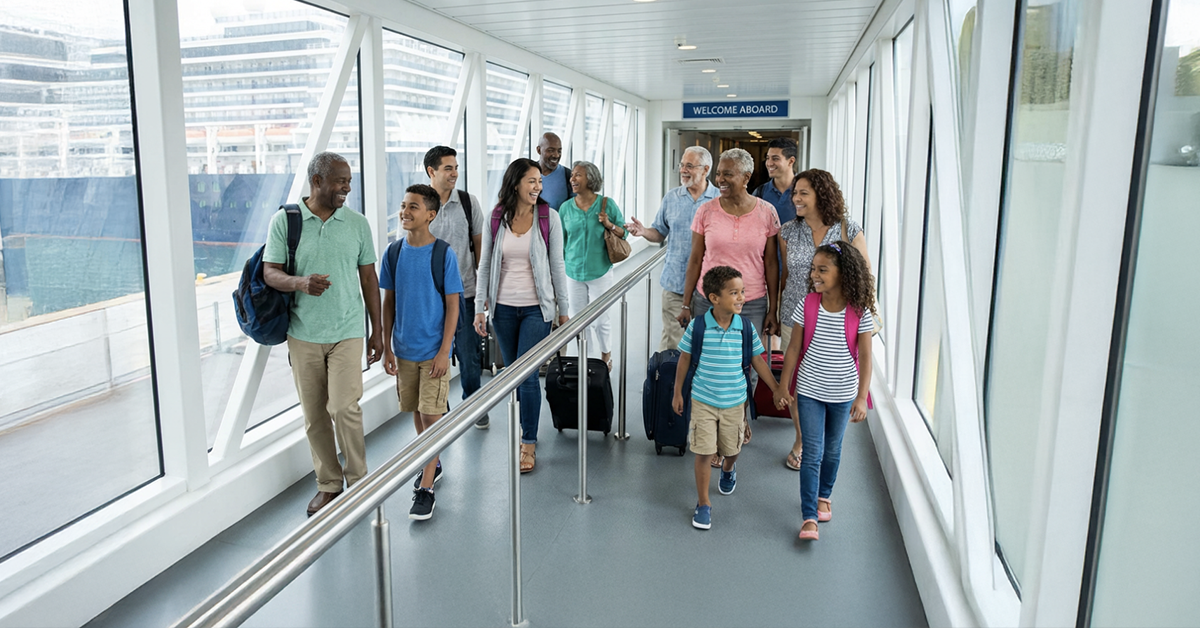
Once your group is called, you’ll walk down the gangway and step onto your ship—often greeted by music, smiling crew members, and the excitement of the start of your vacation.
Finally, let’s talk about arriving early for a smooth boarding experience.
Cruise lines recommend arriving at least two hours before your scheduled boarding time, and this is one guideline worth following closely. Arriving early gives you time to:
- Navigate traffic around the port
- Unload luggage and check in with porters
- Move through security screening
- Complete cruise line check‑in
- Settle into the boarding area without feeling rushed
The Port of Miami is busiest during late morning and early afternoon, when multiple ships may be boarding at once. Giving yourself extra time ensures you’re not caught off guard by traffic, weather, or unexpected delays.
Once you’ve completed security and check‑in, you’ll enter the boarding lounge. Cruise line staff will call groups in waves, and before you know it, you’ll be stepping onto your ship and beginning your vacation.
Thank you for joining us for Episode 5 of Cruise Smart Miami. In our next episode, we’ll guide you through disembarkation and what to expect when your cruise returns to the Port of Miami.
To learn more about planning your Florida adventures, visit VisitFloridaGuide.com.
Cruise Smart Miami: Safety, Security, and Boarding Procedures at the Port of Miami
A smooth embarkation day begins with understanding the safety, security, and boarding procedures that guide every traveler through the Port of Miami. These steps are designed to protect passengers, crew, and vessels while keeping the boarding experience efficient and welcoming. Knowing what to expect helps you arrive prepared, confident, and ready to start your vacation.
This guide walks you through the port’s safety protocols, security screening, allowed and prohibited items, and how boarding groups work.
Key Focus Points
- The Port of Miami follows strict safety and security protocols designed to protect all passengers, crew, and vessels.
- Security screening is similar to airport procedures, including ID checks, luggage scanning, and metal detectors.
- Knowing what items are allowed and prohibited can speed up your boarding experience.
- Arriving at least two hours before your scheduled boarding time ensures a smooth, unhurried check‑in process.
Safety and Security Protocols at the Port of Miami
As one of the busiest cruise ports in the world, the Port of Miami operates under rigorous federal safety standards. The port works closely with the U.S. Coast Guard, Customs and Border Protection, and the Transportation Security Administration to ensure that every ship, terminal, and passenger is protected.
Security teams monitor the port around the clock using advanced technology and trained personnel. Surveillance cameras, controlled access points, and patrol teams work together to ensure that only authorized individuals enter secure areas. These systems are designed to be thorough without feeling intrusive, creating a safe environment that remains welcoming and easy to navigate.
Every terminal is equipped with emergency response systems, clear evacuation routes, and staff trained to respond quickly in the rare event of an emergency. These protocols are not meant to slow travelers down—they are designed to create a safe, organized experience for everyone. With millions of passengers moving through the port each year, these systems are efficient, well‑practiced, and traveler friendly.
What to Expect During Security Screening
Security screening at the Port of Miami is similar to airport procedures but generally moves more quickly. When you enter your terminal, port staff and cruise line representatives guide you through each step.
Here’s what typically happens:
You will present your travel documents—usually a passport or government‑issued ID—along with your boarding pass. Your luggage will be scanned using X‑ray machines, while larger checked bags are handed to porters outside the terminal and screened separately. You will walk through a metal detector, and your carry‑on items will go through a scanner. Security personnel may ask brief questions or inspect items if something requires clarification.
The process is straightforward, and staff are trained to assist travelers who need extra time or support. If you are traveling with children, mobility devices, or medical equipment, simply let the staff know—they are there to help.
Security screening is designed to be efficient but thorough. Items that raise questions may be inspected, and travelers may be asked to remove electronics or liquids from their bags. These steps help ensure a safe and enjoyable experience for everyone on board.
Allowed and Prohibited Items
One of the easiest ways to speed up your boarding experience is to know what you can and cannot bring through security. While each cruise line has its own policies, several guidelines apply across the board.
Commonly allowed items include:
- Small quantities of non‑alcoholic beverages (depending on cruise line rules)
- Personal medications
- Mobility devices and medical equipment
- Carry‑on bags and personal items
- Travel‑size toiletries
Commonly prohibited items include:
- Weapons or sharp objects
- Irons, hot plates, or heating coils
- Large power strips or surge protectors
- Alcohol not purchased through approved programs
- Drones, depending on cruise line policy
- Candles or open‑flame devices
- Certain sports equipment
If you are unsure about an item, check your cruise line’s website before you arrive. Knowing what to pack—and what to leave at home—helps you move through security quickly and without surprises.
Cruise Line Check‑In and Boarding Groups
After completing security screening, you will enter the cruise line check‑in area. This is where your identity is confirmed, your travel documents are verified, and you receive your boarding group or digital boarding pass.
Most cruise lines now offer online check‑in before you arrive at the port. Completing this step ahead of time speeds up your experience significantly. You upload your photo, enter your travel details, and select an arrival time. When you reach the terminal, staff simply scan your documents and direct you to the boarding lounge.
Boarding happens in waves. Cruise lines call groups based on arrival times, loyalty status, or stateroom categories. This system manages the flow of passengers and prevents overcrowding at the gangway.
Once your group is called, you will walk down the gangway and step onto your ship—often greeted by music, smiling crew members, and the excitement of the start of your vacation.
Why Arriving Early Matters
Cruise lines recommend arriving at least two hours before your scheduled boarding time, and this guideline is worth following closely. Arriving early gives you time to navigate traffic, unload luggage, move through security screening, complete check‑in, and settle into the boarding area without feeling rushed.
The Port of Miami is busiest during late morning and early afternoon, when multiple ships may be boarding at once. Giving yourself extra time ensures you are not caught off guard by traffic, weather, or unexpected delays.
Once you have completed security and check‑in, you will enter the boarding lounge. Cruise line staff will call groups in waves, and before long, you will be stepping onto your ship and beginning your vacation.
MD Natural Care
Synerjis Adaptogen Pathway:

Travel Smart Supplements
Cruise Smart Miami Podcast series includes the following episodes:
- Introduction: Welcome to the Cruise Capital of the World
- Episode 1: Do’s and Don’ts for a Smooth Port Experience
- Episode 2: Transportation Options from Miami International Airport
- Episode 3: Parking, Drop‑Off, and Transportation Options
- Episode 4: Accessibility at the Port of Miami
- Episode 5: Safety, Security, and Boarding Procedures
- Episode 6: Disembarkation: What to Expect When Your Cruise Returns to Miami
- Episode 7: Pre‑ and Post‑Cruise Experiences in Miami
- Episode 8: About the Port of Miami