
Port of Miami Presents:
Cruise Smart Miami
Episode 8: About the Port of Miami Present and Future
Episode 8: About the Port of Miami Present and Future
Transcript
Welcome to Cruise Smart Miami, presented by The Port of Miami and Visit Florida Guide, where we Connect Destinations with Visitors. In today’s episode, we’re taking a broader look at the Port of Miami—its scale, its impact, and why it continues to be one of the most important cruise and cargo ports in the world. Whether you’re a first‑time cruiser or a seasoned traveler, understanding the port’s role helps you appreciate just how remarkable this gateway truly is.
Before we begin, here are today’s key focus points:
- The Port of Miami is home to a diverse lineup of cruise lines and ship types.
- Millions of passengers travel through the port every year.
- Miami remains a top port of call thanks to its location, infrastructure, and global connectivity.
- The port is also a major cargo hub with significant economic impact.
- Tens of thousands of jobs are supported by port operations.
- Major capital improvement projects continue to expand and modernize the port.
- Sustainability initiatives are shaping the port’s future.
Let’s explore each of these in detail.
Let’s start with the cruise lines operating from the Port of Miami.
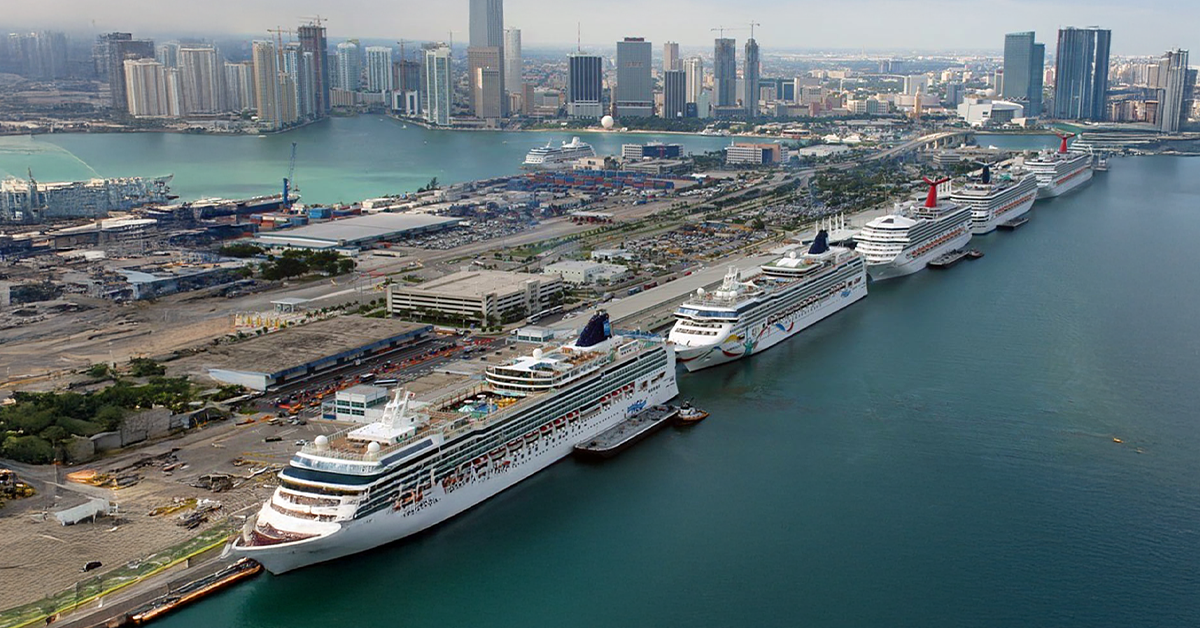
The Port of Miami is known as the Cruise Capital of the World for good reason. It serves as a homeport for many of the world’s leading cruise lines—Royal Caribbean, Carnival, Norwegian, MSC, Disney, Virgin Voyages, Celebrity, Oceania, and Regent Seven Seas. This incredible variety means travelers can choose from an enormous range of itineraries, ship styles, and onboard experiences. Whether you’re looking for a family‑friendly mega‑ship packed with entertainment or an intimate luxury vessel offering personalized service, Miami has a ship that fits your style.
Now, let’s talk about the types of ships that sail from Miami.
Some of the largest and most advanced cruise ships ever built call the Port of Miami home. These mega‑ships are essentially floating cities, complete with water parks, theaters, multiple dining districts, neighborhood‑style decks, and high‑tech entertainment. They’re especially popular with families and travelers who want a resort‑style vacation at sea.
On the other end of the spectrum, luxury cruise lines offer smaller, more intimate vessels. These ships focus on elevated service, fine dining, and exclusive itineraries, often with high crew‑to‑guest ratios that create a personalized, all‑inclusive experience.
Miami also welcomes specialty and expedition ships designed for niche travel styles—everything from culinary‑themed voyages and wellness cruises to boutique Caribbean itineraries and cultural immersion trips. This diversity makes Miami a launch point for nearly every type of cruise vacation imaginable.
Next, let’s look at annual passenger statistics.
The Port of Miami consistently ranks as the busiest cruise port in the world. In a typical year, millions of passengers travel through its terminals, and that number continues to grow as new ships and new terminals come online. This incredible volume reflects Miami’s global appeal and the port’s ability to handle high passenger traffic with efficiency and ease.
Now, let’s explore why Miami is such a top port of call.
Miami’s strategic location places it at the gateway to the Caribbean, the Bahamas, Central America, and South America. This makes it an ideal starting point for both short getaways and extended voyages.
The port’s world‑class infrastructure also plays a major role. Modern terminals, advanced security systems, and efficient traffic flow help ensure smooth operations for both passengers and cruise lines.
Beyond the port itself, Miami’s vibrant city experience is a major draw. Travelers love the beaches, the culture, the dining, and the nightlife—and many choose to extend their vacation before or after their cruise.
And finally, Miami International Airport provides extensive domestic and international flight options, making it easy for travelers from around the world to reach the port.
Let’s shift to cargo volume and economic contribution.
While the Port of Miami is famous for its cruise operations, it is also a major cargo hub. The port handles millions of tons of cargo every year, including consumer goods, electronics, apparel, food products, and construction materials. This activity plays a vital role in supporting regional and national supply chains.
Economically, the port contributes billions of dollars to the local and state economy annually. Its operations generate revenue, support businesses, and fuel growth across multiple industries.
Now, let’s talk about the jobs supported by the Port of Miami.
The Port of Miami is a major employer and economic engine for South Florida. Tens of thousands of jobs are supported directly and indirectly by port operations. These include cruise line staff, longshore workers, transportation providers, hospitality and tourism employees, retail and service workers, and logistics and cargo professionals. Together, these jobs help sustain Miami’s vibrant economy and support families throughout the region.
Next, let’s look at major capital improvement and expansion projects.
To keep pace with growing demand, the Port of Miami continues to invest in major upgrades. New state‑of‑the‑art cruise terminals are being built, roadways are being expanded to improve traffic flow, and cargo handling equipment is being modernized. The port is also deepening and widening its shipping channels to accommodate larger vessels and upgrading its security and screening systems. These improvements ensure the port remains competitive, efficient, and ready for the next generation of cruise and cargo ships.
Finally, let’s talk about sustainability and modernization initiatives.
The Port of Miami is committed to growing responsibly and protecting the environment. Shore power infrastructure is being installed so ships can plug in and reduce emissions while docked. New terminal designs prioritize energy efficiency, water conservation, and stormwater management. Waste reduction and recycling programs are expanding, and the port is partnering with cruise lines to support cleaner, greener operations.
These initiatives reflect the port’s long‑term vision: to remain a global leader in cruise and cargo operations while safeguarding Miami’s natural environment for future generations.
Thank you for joining us for Episode 8 of Cruise Smart Miami. We hope this series has helped you feel informed, confident, and excited as you travel through the Cruise Capital of the World. To discover more ways to explore Miami and plan your Florida adventures, visit VisitFloridaGuide.com — and be sure to subscribe so you’re notified whenever we add new episodes or expand this series.
Cruise Smart Miami: About the Port of Miami Present and Future
The Port of Miami is more than a place to begin or end your cruise — it is one of the most influential seaports in the world. Its scale, connectivity, and economic impact make it a global powerhouse for both cruise and cargo operations. Whether you’re a first‑time cruiser or a seasoned traveler, understanding the port’s role helps you appreciate just how remarkable this gateway truly is.
This guide explores the port’s cruise lines, ship types, passenger volume, economic contributions, infrastructure, and sustainability initiatives.
Key Focus Points
- The Port of Miami is home to a diverse lineup of cruise lines and ship types.
- Millions of passengers travel through the port every year.
- Miami remains a top port of call thanks to its location, infrastructure, and global connectivity.
- The port is also a major cargo hub with significant economic impact.
- Tens of thousands of jobs are supported by port operations.
- Major capital improvement projects continue to expand and modernize the port.
- Sustainability initiatives are shaping the port’s future.
Cruise Lines Operating From the Port of Miami
The Port of Miami is known worldwide as the Cruise Capital of the World, and its lineup of cruise lines reflects that title. It serves as a homeport for many of the industry’s most recognized brands, including Royal Caribbean, Carnival, Norwegian, MSC, Disney, Virgin Voyages, Celebrity, Oceania, and Regent Seven Seas.
This diversity gives travelers an extraordinary range of choices. Whether you prefer a family‑friendly mega‑ship filled with entertainment or a small luxury vessel offering personalized service, Miami has a ship that fits your travel style. The port’s variety of itineraries, ship sizes, and onboard experiences makes it one of the most versatile cruise gateways in the world.
Types of Ships Sailing From Miami
Some of the largest and most advanced cruise ships ever built call Miami home. These mega‑ships function like floating cities, complete with water parks, theaters, dining districts, neighborhood‑style decks, and high‑tech entertainment. They’re especially popular with families and travelers seeking a resort‑style vacation at sea.
At the same time, Miami welcomes smaller luxury vessels known for elevated service, fine dining, and exclusive itineraries. These ships often feature high crew‑to‑guest ratios and offer a more intimate, all‑inclusive experience.
The port also hosts specialty and expedition ships designed for niche travel styles — from culinary‑themed voyages and wellness cruises to boutique Caribbean itineraries and cultural immersion trips. This range makes Miami a launch point for nearly every type of cruise vacation imaginable.
Annual Passenger Volume
The Port of Miami consistently ranks as the busiest cruise port in the world. In a typical year, millions of passengers travel through its terminals, and that number continues to grow as new ships and terminals come online.
This incredible volume reflects Miami’s global appeal and the port’s ability to handle high passenger traffic with efficiency, comfort, and ease.
Why Miami Is a Top Port of Call
Miami’s strategic location places it at the gateway to the Caribbean, the Bahamas, Central America, and South America — making it an ideal starting point for both short getaways and extended voyages.
The port’s world‑class infrastructure also plays a major role. Modern terminals, advanced security systems, and efficient traffic flow support smooth operations for both passengers and cruise lines.
Beyond the port itself, Miami’s vibrant city experience is a major draw. Travelers love the beaches, culture, dining, and nightlife — and many choose to extend their vacation before or after their cruise.
Miami International Airport further enhances the port’s accessibility, offering extensive domestic and international flight options that make it easy for travelers from around the world to reach the port.
Cargo Volume and Economic Contribution
While the Port of Miami is famous for its cruise operations, it is also a major cargo hub. The port handles millions of tons of cargo every year, including consumer goods, electronics, apparel, food products, and construction materials. This activity supports regional and national supply chains and plays a vital role in the movement of goods across the hemisphere.
Economically, the port contributes billions of dollars to the local and state economy annually. Its operations generate revenue, support businesses, and fuel growth across multiple industries.
Jobs Supported by the Port of Miami
The Port of Miami is a major employer and economic engine for South Florida. Tens of thousands of jobs are supported directly and indirectly by port operations. These include:
- Cruise line staff
- Longshore workers
- Transportation providers
- Hospitality and tourism employees
- Retail and service workers
- Logistics and cargo professionals
Together, these jobs help sustain Miami’s vibrant economy and support families throughout the region.
Capital Improvements and Expansion Projects
To keep pace with growing demand, the Port of Miami continues to invest in major upgrades. New state‑of‑the‑art cruise terminals are being built, roadways are being expanded to improve traffic flow, and cargo handling equipment is being modernized.
The port is also deepening and widening its shipping channels to accommodate larger vessels and upgrading its security and screening systems. These improvements ensure the port remains competitive, efficient, and ready for the next generation of cruise and cargo ships.
Sustainability and Modernization Initiatives
The Port of Miami is committed to growing responsibly and protecting the environment. Sustainability initiatives include:
- Installing shore power infrastructure so ships can plug in and reduce emissions while docked
- Designing new terminals with energy‑efficient systems and water conservation features
- Expanding waste reduction and recycling programs
- Partnering with cruise lines to support cleaner, greener operations
These efforts reflect the port’s long‑term vision: to remain a global leader in cruise and cargo operations while safeguarding Miami’s natural environment for future generations.
MD Natural Care
Synerjis Adaptogen Pathway:

Travel Smart Supplements
Cruise Smart Miami Podcast series includes the following episodes:
- Introduction: Welcome to the Cruise Capital of the World
- Episode 1: Do’s and Don’ts for a Smooth Port Experience
- Episode 2: Transportation Options from Miami International Airport
- Episode 3: Parking, Drop‑Off, and Transportation Options
- Episode 4: Accessibility at the Port of Miami
- Episode 5: Safety, Security, and Boarding Procedures
- Episode 6: Disembarkation: What to Expect When Your Cruise Returns to Miami
- Episode 7: Pre‑ and Post‑Cruise Experiences in Miami
- Episode 8: About the Port of Miami